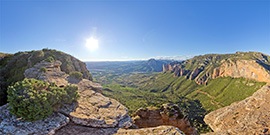
The village of La Peña is located 39 kilometers from Huesca, the region’s capital.
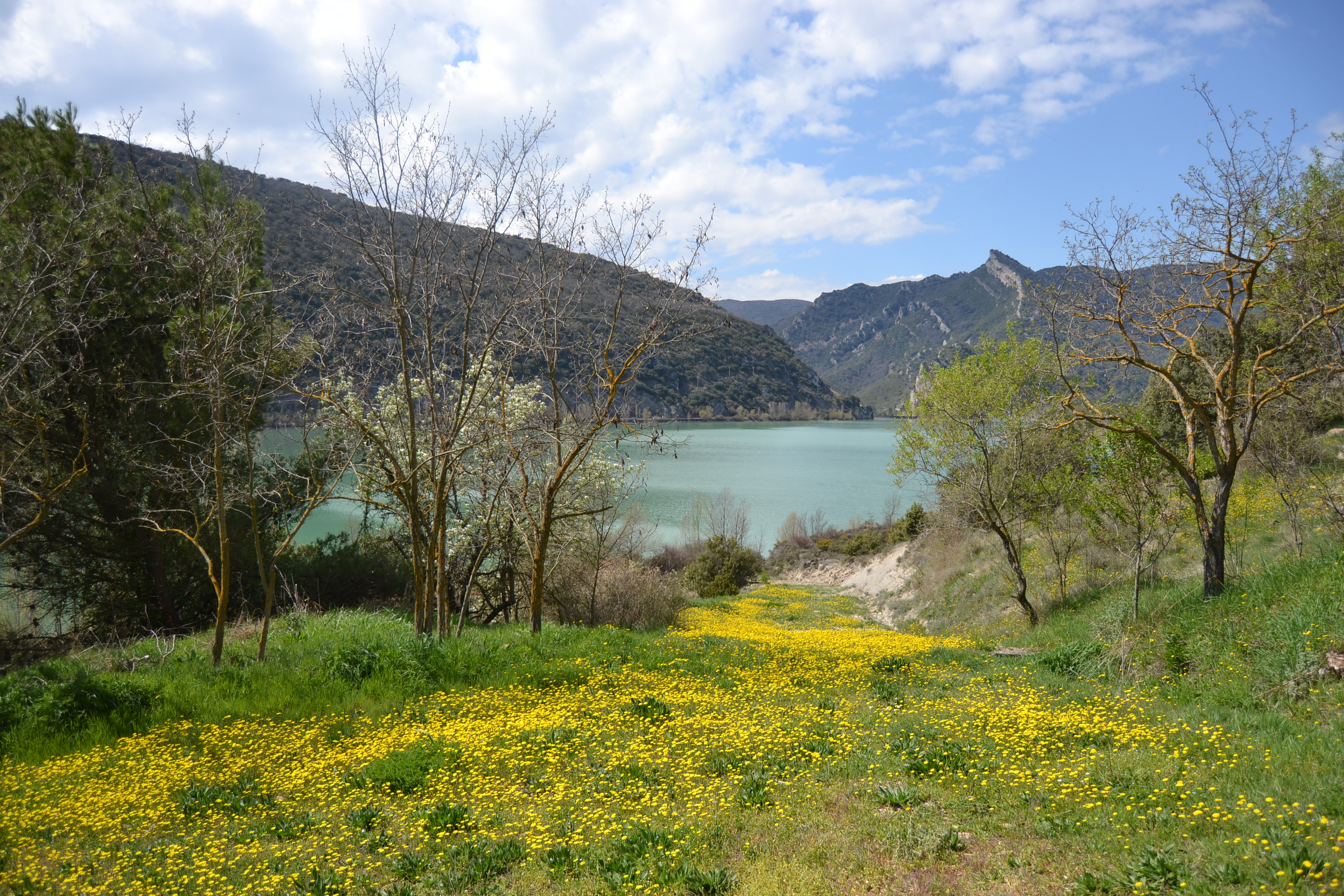
This quaint hamlet is found on the other side of an iron bridge that spans La Peña reservoir.
The houses were built in the early 20th century with the passing of the Canfranero railway line and the construction of the reservoir to regulate the waters of the Gállego River.
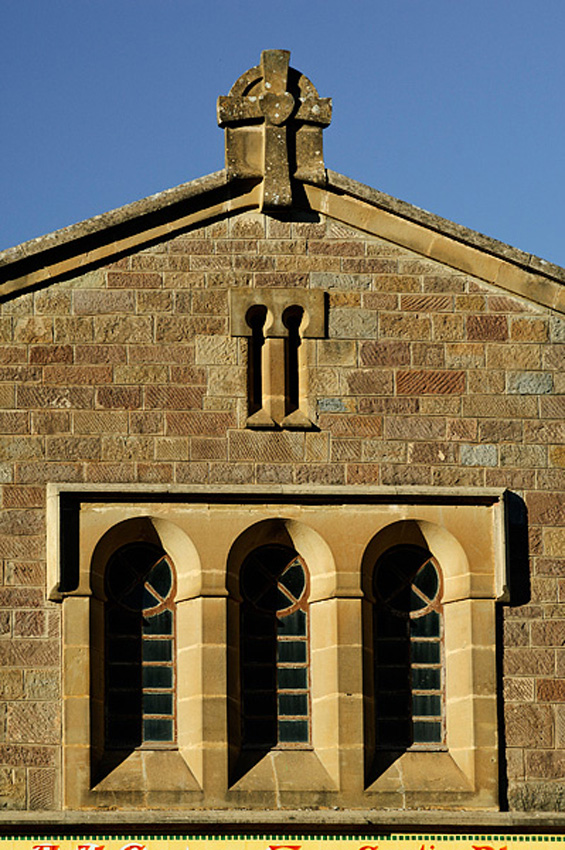
The Parish Church of the Virgen de la Peña was constructed more recently (20th century), the original church now covered by the reservoir.
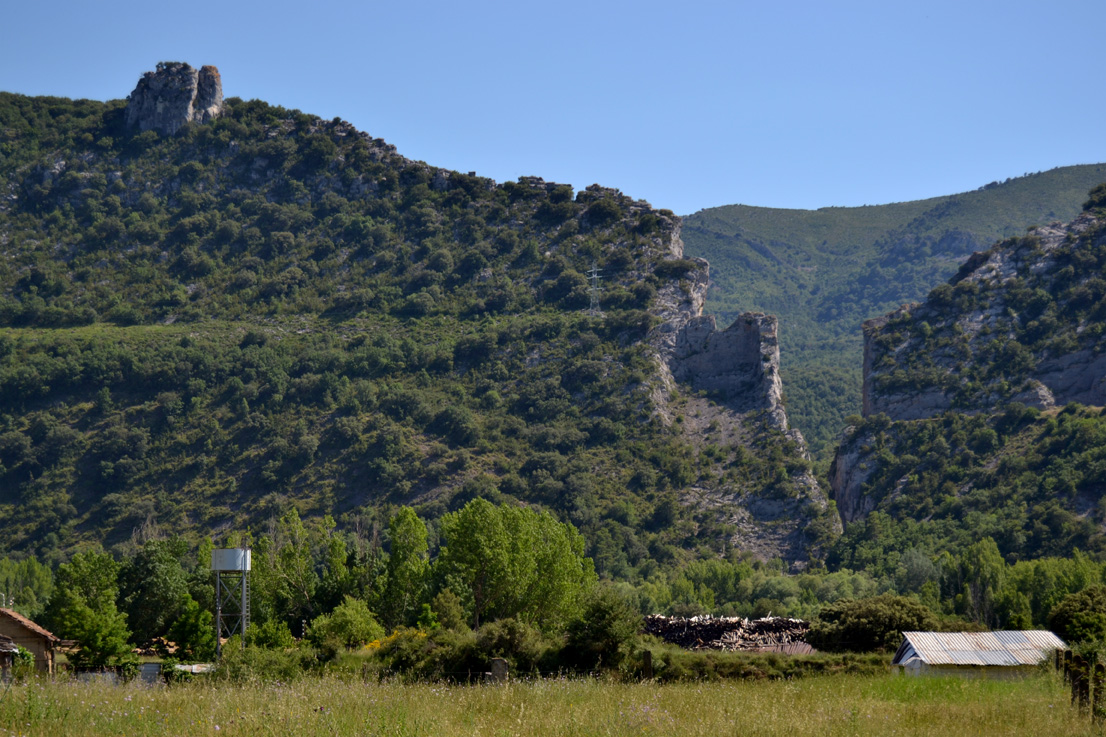
Traces of the Cacabiello castle remain on the limestone ridge that towers over the road near the village.
Another point of interest is the millennium-old bridge, most likely Roman and repaired in the Middle Ages, which is now under water under the iron bridge.
Stunning and naturally rich landscapes are found nearby, including the visually spectacular Foz de Escalete, also home to prehistoric burial caves.
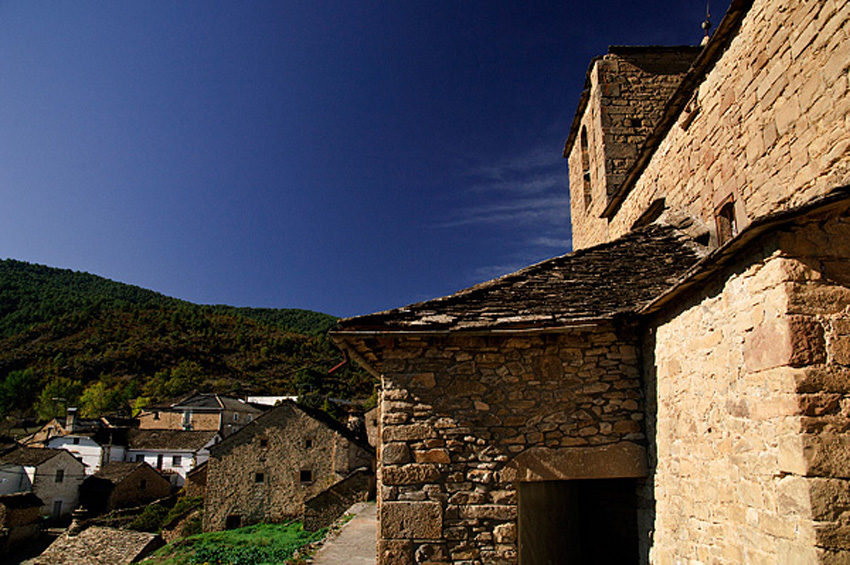
This quaint village located in the San Juan de la Peña Cultural Park knows how to showcase its mountain style.
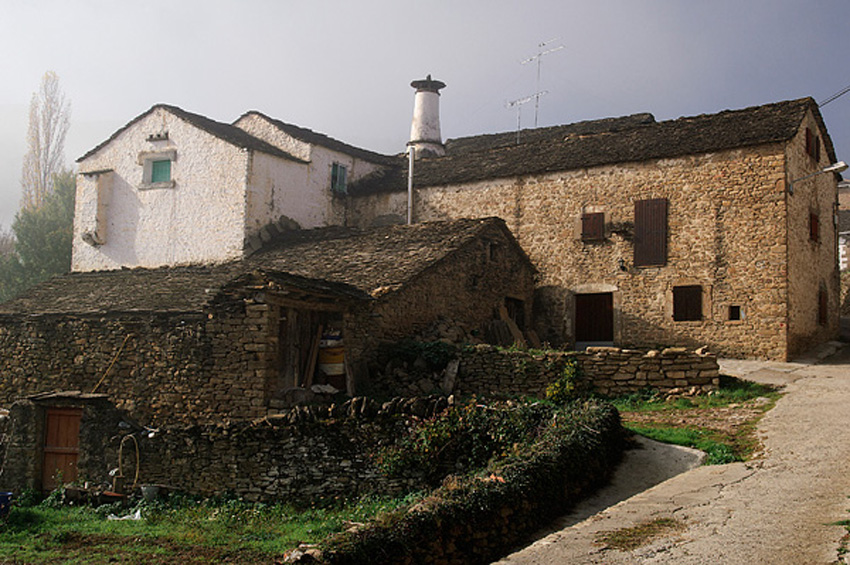
The hamlet is built around a main street, and features several examples of outstanding architecture, including “Casa Juan”, which dates back to 1551, and the 18th-century “Casa Simón”.
Many of the buildings have fireplaces, so the outsides of the homes feature “chamineras”, or chimneys in the style of a truncated cone crowned by an “espantabrujas”, a traditional way of protecting homes from evil spirits.
The Romanesque Parish Church of San Esteban, and its two nearby chapels, Santa María (11th century), and Santa Isabel (12th century), also speak of a rich medieval past.
Centenero celebrates its annual festival on September 2nd.
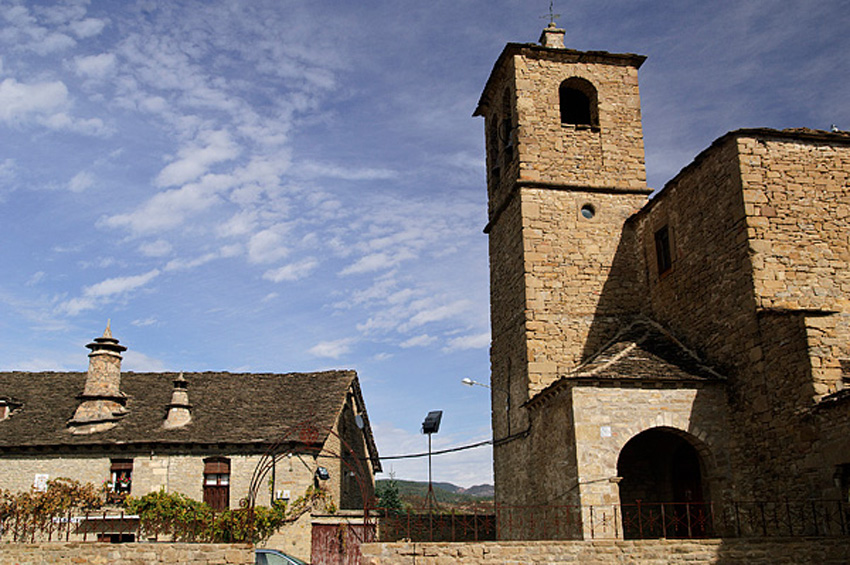
Located at the foot of the Sierra de San Juan de la Peña, the village of Ena appears after a winding road.
The hamlet is built in such a way that, located between two ravines, it creates two neighborhoods linked by some of its main streets. The houses are another point of interest: many preserve elements of the past, like coats of arms and other decorative details, like the Casa Laborda and the 16th-century Casa Ascaso.
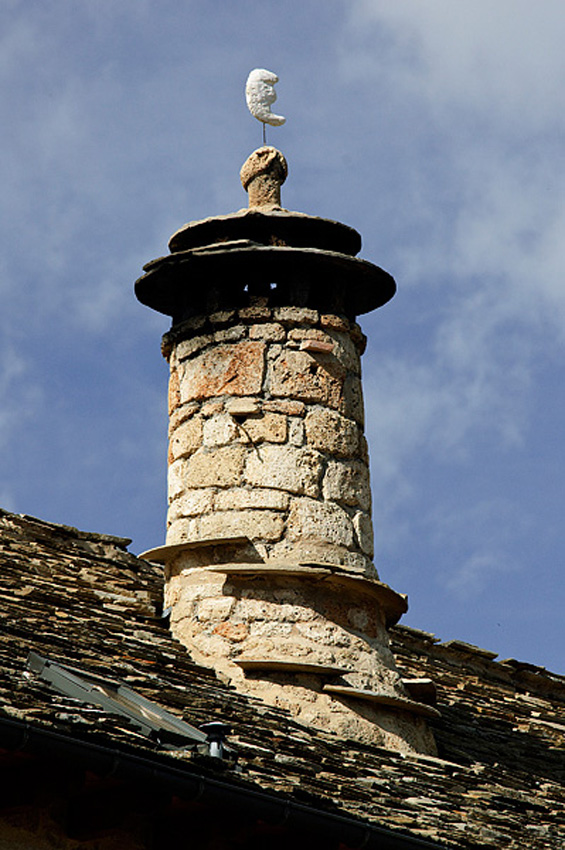
The characteristic conical “chamineras”, or chimneys, that crown the homes and are topped by “espantabrujas”, a traditional way of protecting homes from evil spirits, are of particular interest.
The traditional Parish Church of San Pedro can be visited along with the Chapel of the Virgen del Camino.
You can also visit a number of additional attractions including two flour mills, the municipal jail, the trough fountain, etc.
Ena celebrates its annual festival on January 19th in honor of St. Sebastian, with a bonfire and potluck dinner. A minor festival in honor of St. Gervasius is celebrated on June 19th, while the major festival from August 13th to 16th celebrates Assumption of Mary.
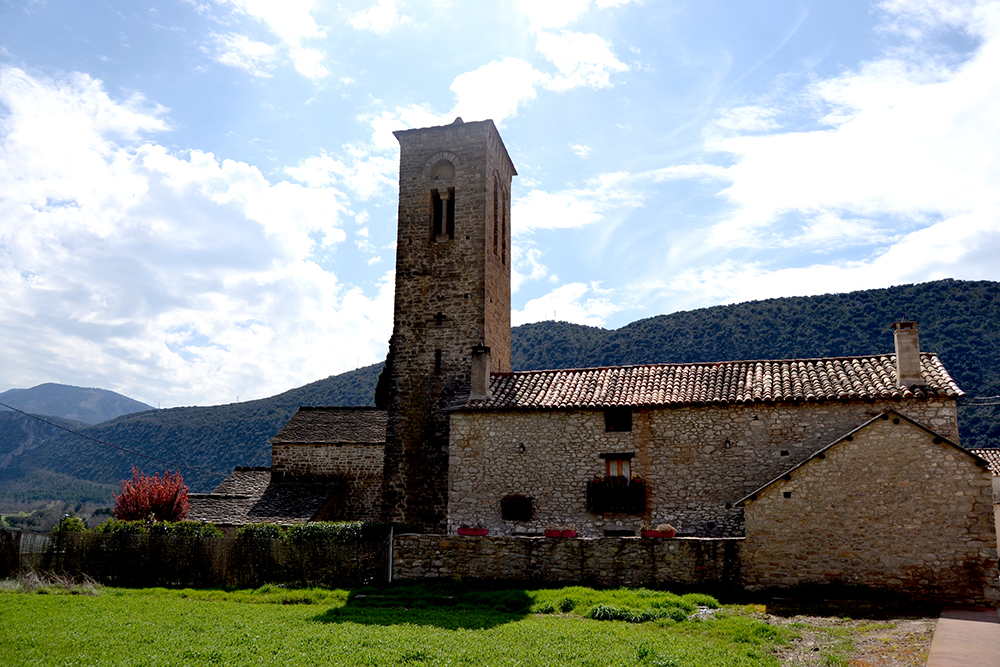
An inviting and quaint village in La Peña valey, Triste is located within the San Juan de la Peña Cultural Park.
Its slender Parish Church of Santa María rises from between the houses. The building dates back to the Middle Ages with its 12th-century Romanesque style. Its slender bell tower is attached to an elegant Lombard-style apse.
The homes feature traditional mountain architecture, with solid conical chimneys, arched doors, and several coats of arms.
Of great ethnological significance, the traditional textile workshop, dedicated to the weaving craft, is a must-visit.
Triste is one of the villages in Hoya de Huesca through which the Catalan section of the Camino de Santiago (Way of St. James) passes, as well as part of the GR95, specifically the La Peña Estación-Ena stage.
Triste celebrates its annual festivals on July 15th in honor of Our Lady of Carmen and on August 15th in honor of the Assumption of Mary.







Loading events...