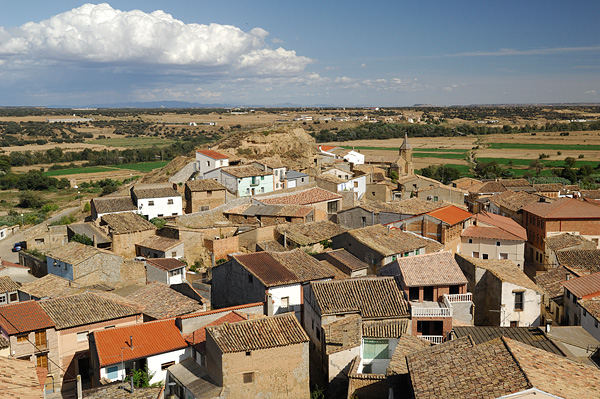
Sesa is a small village located on the banks of the Guatizalema River.
The area was once inhabited by the Romans, who coining the first coins here between the 1st and 2nd centuries BC, and although it was a very rare mint with few pieces made, these were the first denarios to be discovered in Aragón.
There was significant Muslim presence in this area that meets the Somontano de Barbastro, which is why the King of Aragón decided to gradually conquer the plain, rich and fruitful compared to the harsh mountain.
The hamlet of Sesa was built adapting to the terrain of the hill, with the early-13th-century Parish Church of San Juan Bautista at the center. The building features a single nave ends in a semicircular apse topped by a quarter-sphere vault. Aside from the barrel-vaulted apse, the church also features a façade with six archivolts that rest on four pairs of capitals decorated with Gothic plant designs and two pilasters.
To the north of the temple, a prominent rocky platform was once most likely an Islamic settlement that was later fortified by the Christians, a common occurrence in the region.
Nearby is the Chapel of Nuestra Señora de la Jarea, with a Gothic cloister and a lime kiln, as well as the interesting “piedras fecundantes (fertility rocks)”, linked to ancestral fertility rites: "Chaste" and "The Mouse".
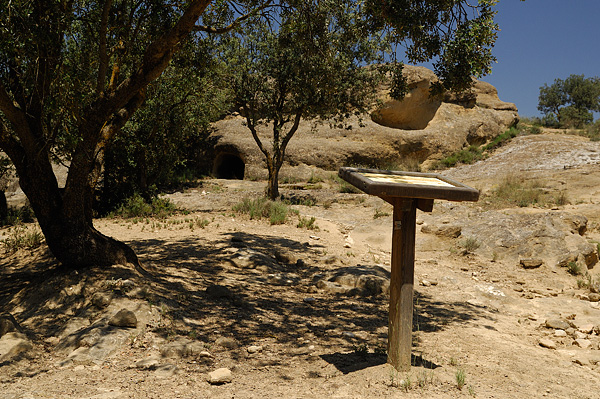
Sesa celebrates its annual festival on August 15th in honor of the Assumption of Mary, and the pilgrimage to Nuestra Señora de la Jarea is celebrated during Easter Week.
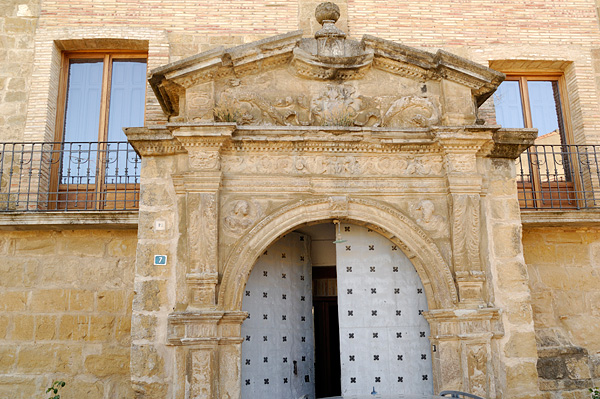
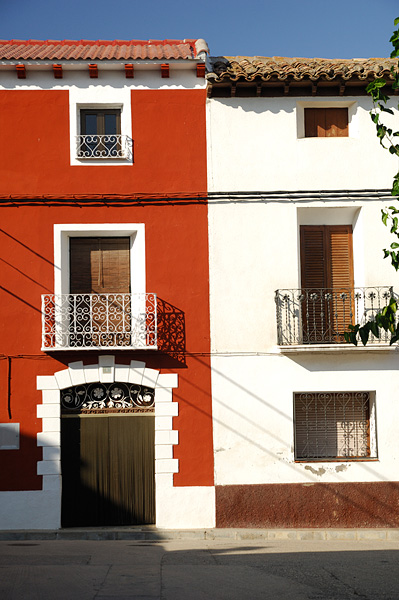
The quaint village of Salillas is found on the slopes of a small rise above the Guatizalema River.
At the entrance to Salillas is the village’s former ice house, a traditional structure in the region where ice was kept for the summer season; sometimes these storage facilities are cavities carved out of rock or hillside, others are free-standing structures made with bricks and no mortar that cover a space dug out of the ground. In Salillas, the ice house was carved out of the rock and may be of 15th-century Moorish origin. The peculiar interior vault, supported by crisscrossed arches, is striking.
The village’s Parish Church of Santa Ana is a Gothic-style building.
The Palacio de Marqueses de Montemuzo is located in one of the village’s main square; this stunning mansion boasts a Renaissance façade that bears the Pomar family coat of arms (16th century). The building was built over a former castle, the tower of which can still be seen today.
The village celebrates its major festival on July 26th in honor of St. Ana; other minor festivals are held on May 26th to honor St. Felipe Neri, and bonfires celebrate St. Blaise, St. Fabian, and St. Sebastian throughout the year.
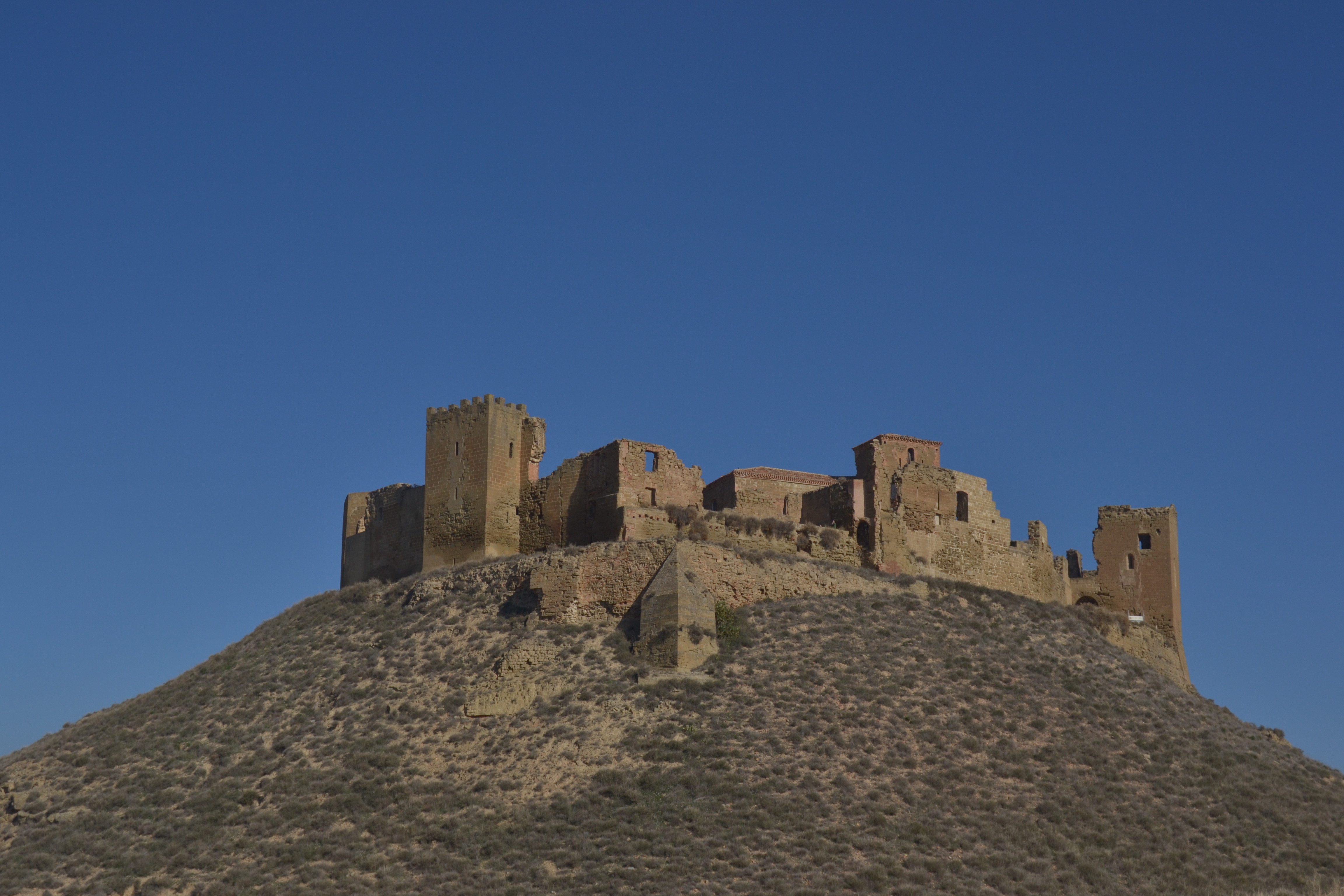
The quaint village of Quicena is located on the region’s extensive plain, heading towards Barbastro.
As a villa it was donated to the Abbey of Montearagón by Sancho Ramírez and Peter I in 1086.
The 18th-century Parish Church of the Asunción de la Virgen sits at one end of the village.
Nearby is the Chapel of San Pedro, now in ruins, as well as an ancient aqueduct that some date back to the 2nd century and a likely Roman origin, although it has not been confirmed.
However, the masterpiece that enriches Quicena’s scenery is the Montearagón Castle and Abbey. This fortress was built in the 11th century after a mandate by Sancho Ramírez and served to help conquer the Muslim plaza in Huesca in 1096, during the rule of Peter I. This dual purpose (castle and abbey) was common in the Kingdom of Aragón, and the Castle and Abbey in Quicena maintained its splendor until the 19th century, when disentailments (the sale of church lands by the state) resulted in its abandonment. Part of its heritage, preserved today at the Diocesan Museum in Huesca, includes the alabaster altarpiece by Gil de Morlanes the Elder, and the tomb of Alfonso I the Battler, located in the Royal Pantheon at the San Pedro el Viejo Monastery.
Quicena celebrates its annual festival on July 25th in honor of St. James.
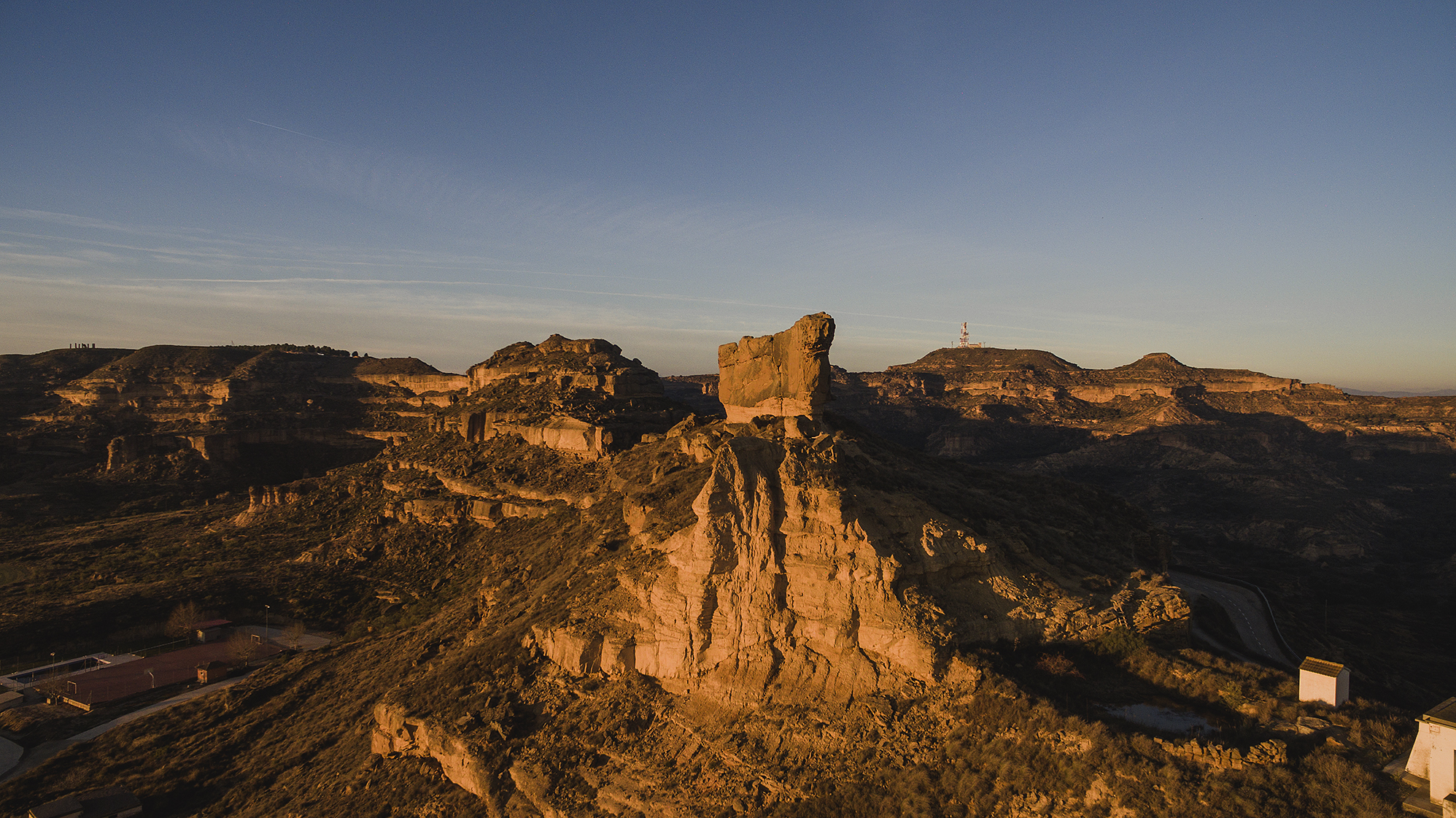
The village of Piracés is located in a jagged region between the Flumen and Guatizalema rivers.
The surrounding steppe, silent, dotted with escarpments carved by the wind in the Tertiary Era and deposits of sandstones and clays, enhances the scenic beauty of the hamlet that hugs the irregular terrain.
The Parish Church of San Pedro, a late-Gothic-style building, is located halfway to the top of the urban layout.
Continue climbing the escarpments and other surrounding rock formations until you reach the biggest of them all, the “Peña Mediodía”, named after the sunlight that falls on the rock midday (“mediodía” means midday in Spanish). This is a rocky platform, an immense sandstone formation 80 meters long and 25 meters high. A climb to the peak is well worth the panoramic views of the entire plain unfolding below this strategic position. In fact, this site was used as a watchtower of an Arab fortress during the 9th and 10th centuries. Hollows, cavities, even the remains of an ancient chimney provide evidence of this former role.
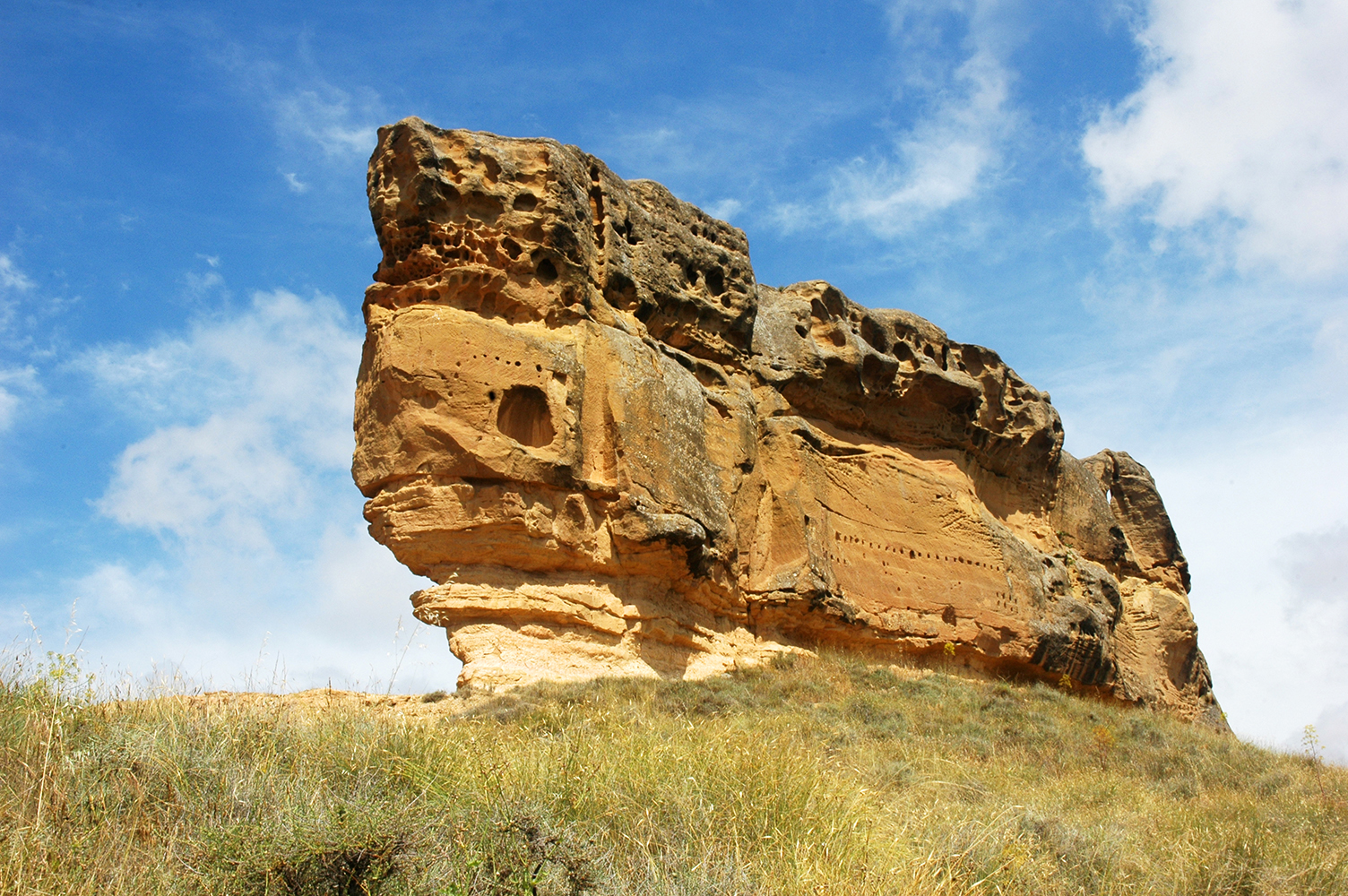
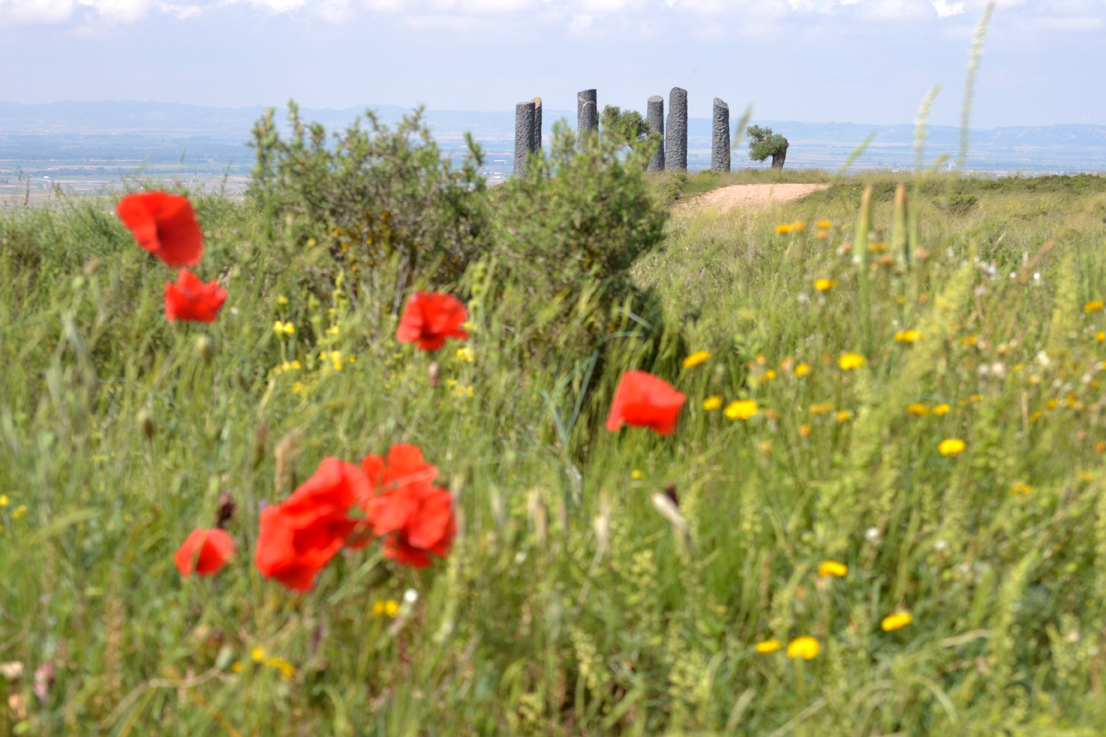
Pass the Peña del Mediodía to reach the Chapel of the Virgen de la Corona, along a trail that features rock formations with an almost human aspect with names like Tío Jorge (Uncle George) and Abuelo San Roque (Grandfather St. Roch), a rock with a profile that looks like an old man wearing a beret, around a hollow where the remains of the old Roman road are found. This chapel, of Romanesque origins (12th century), was significantly renovated in the 16th and 18th centuries. Nearby is “Árboles como Arqueología (Trees as Archeology)”, a contemporary sculptural work formed by eight granite monoliths created by Fernando Casás. This sculpture was the result of a project led by the CDAN Art and Nature Center in Huesca.
An Arab cistern fountain, which dates back to the 10th century, is also located near the village.
Piracés celebrates its annual festival on May 22nd in honor of St. Quiteria, and the pilgrimage to the Chapel of the Virgen de la Corona takes place on the first Sunday in May, and the one to San Jorge on April 23rd.







Loading events...